

Builder
Builder is the Finance-owned data foundation of the Nocloz platform
It helps Finance teams connect, integrate, import, structure, map, adjust, validate, and govern financial data across entities, countries, systems, currencies, and reporting structures.
With Builder, Finance creates the trusted foundation behind every report, dashboard, AI analysis, investor update, and due diligence process.
Build reliable financial data. Govern it from Finance. Make it ready for reporting, AI, and due diligence.
Every trusted financial insight starts with trusted data
Finance teams work with data that comes from many places: accounting systems, ERPs, payroll tools, budget files, analytical ledgers, Excel exports, local charts of accounts, management adjustments, and evolving reporting rules.
That complexity becomes a problem when numbers need to be shared, explained, analyzed, or defended.
Builder turns that complexity into a structured, governed, and traceable financial data foundation.
It gives Finance one controlled place to prepare the data before it becomes visible in Boardroom or analyzed by Dana AI.
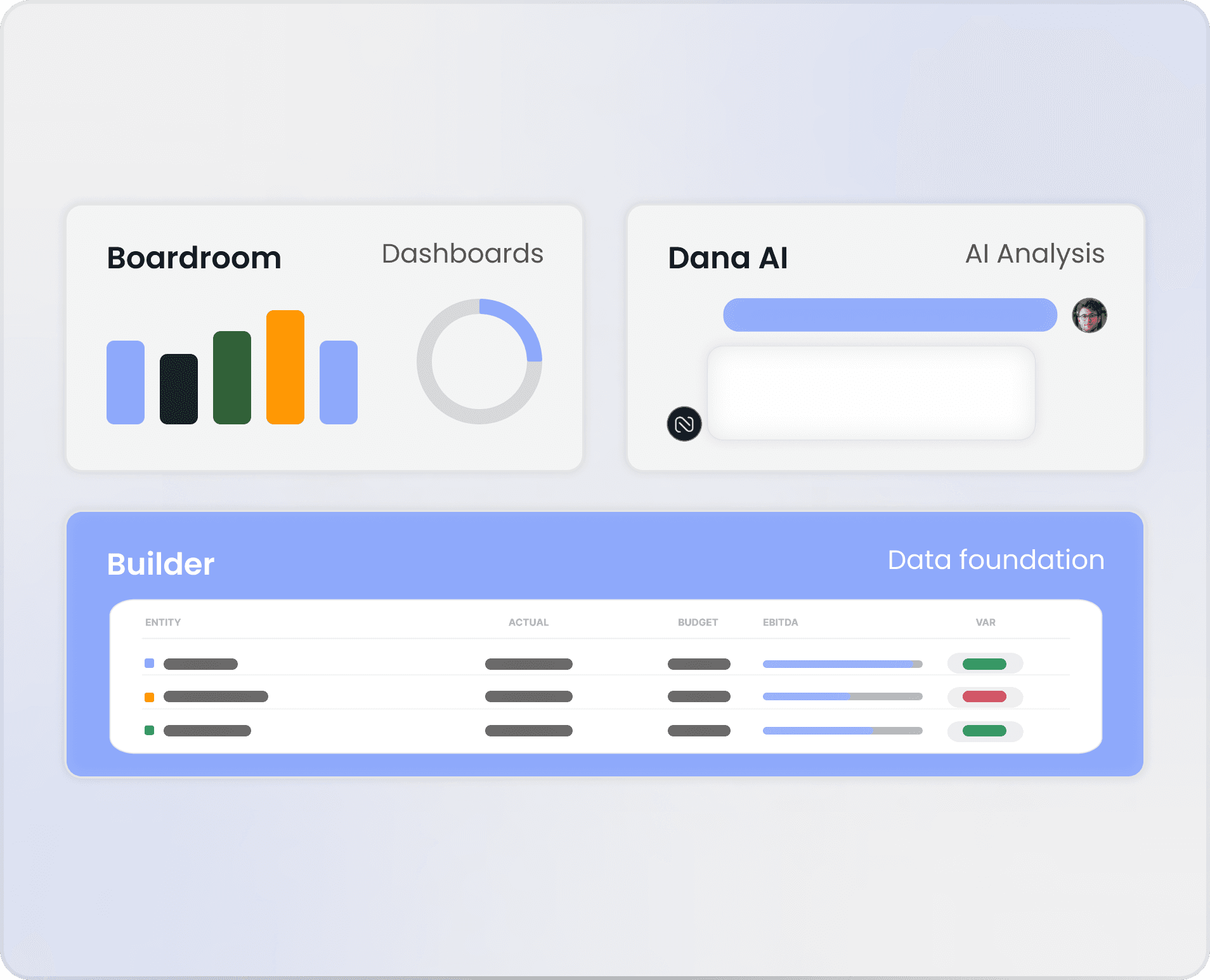

From raw financial data to Finance-grade data
Builder helps Finance teams transform heterogeneous financial sources into a reliable data layer that reflects how the company is actually managed.
It brings together source data, mappings, dimensions, business rules, adjustments, reclassifications, EBITDA normalizations, exceptional items, and reporting logic into one consistent financial model.
The result is financial data that is ready for monthly reporting, performance analysis, board discussions, investor reporting, AI analysis, and due diligence.
How Builder works
Every financial insight starts with a number. Every number starts with a decision: how it's mapped, what rules apply, how it's adjusted, who approved it.
Builder is where Finance makes those decisions, once, in a controlled environment. It replaces the scattered logic hidden in Excel files, local adjustments, and undocumented rules with a single governed layer that the whole organization can rely on.
What gets published from Builder is what Boardroom displays and what Dana analyzes. No shortcuts, no guesswork.
1.
Connect and import every financial source
Builder helps Finance connect and import data from accounting ledgers, payroll, budgets, adjustments, Excel files, CSV files, and non-standard exports.
Data can be brought in through API integrations, automated connectors, file imports, and structured uploads, allowing Finance to consolidate information from multiple systems into one governed environment.
2.
Normalize data across entities, countries, and systems
Builder transforms different formats, accounts, entities, periods, currencies, partners, employees, departments, projects, sites, and analytical dimensions into one consistent financial structure.
This gives Finance a common foundation across the group, even when source systems remain different from one entity or country to another.
3.
Map data to your management model
Builder lets Finance define the way the company reads performance. Accounts and dimensions can be mapped to your management P&L, balance sheet, cash flow, departments, business units, sites, projects, partners, suppliers, customers, employees, and custom reporting levels.
Your reporting structure reflects how the business is managed, how performance is reviewed, and how decisions are made.
4.
Apply Finance rules, adjustments, and treatments
Builder centralizes the rules that turn source data into management-ready data. Finance can apply reclassifications, analytical rules, payroll treatments, intercompany tags, partner mappings, EBITDA normalizations, exceptional items, and reporting adjustments.
The full Finance-prepared dataset includes both source data and the management treatments required to explain performance properly.
5.
Validate, govern, and publish
Builder gives Finance a controlled preparation environment before data is shared. Teams can review, update, adjust, validate, and approve the data before publishing it to Boardroom or making it available to Dana AI.
Every published number can remain connected to its source, mappings, rules, adjustments, and validation status.
Built for real Finance complexity
Builder is designed for Finance teams operating across multiple entities, countries, systems, currencies, reporting structures, and management definitions.
It supports :
Finance owned by design
Builder is made to be operated, maintained, and improved by Finance teams.
Finance can update mappings, enrich rules, add dimensions, adjust reporting logic, integrate new entities, refine EBITDA treatments, and evolve the financial model over time.
That matters because financial reporting logic changes constantly.
New entities are acquired. New departments appear. Budgets evolve. Management views change. Investors ask for new KPIs. Operational teams need different cuts of the same data. Builder gives Finance the autonomy to adapt quickly, keep control of financial definitions, and maintain a living data foundation that grows with the company
This means :
Builder gives Finance the ability to manage its data foundation as a strategic company asset.

One financial memory for the company
In many companies, financial reporting logic lives across spreadsheets, local files, individual habits, recurring manual processes, and undocumented rules.
Builder centralizes that knowledge into a governed system.
Mappings, integration rules, import rules, reclassifications, analytical treatments, partner rules, payroll treatments, budget structures, EBITDA adjustments, and publication logic are recorded and reused inside the platform.
This creates a durable financial memory for the company.
When a rule is defined, it becomes part of the system. When a new entity is added, existing logic can be reused. When a reporting treatment is applied, it becomes traceable. When Finance needs to explain a number, the path from source data to management reporting is available.
Builder turns financial knowledge into a structured, governed, and reusable company asset.
Deeper analysis from the same data layer
Builder makes financial data explorable from group-level performance down to entity, account, partner, employee, department, site, project, or transaction-level detail.
This depth applies to the full Finance-prepared dataset:
Finance can analyze the numbers used for management reporting and decision-making, with the ability to understand what changed, where it changed, and why it changed.


A trusted foundation for AI
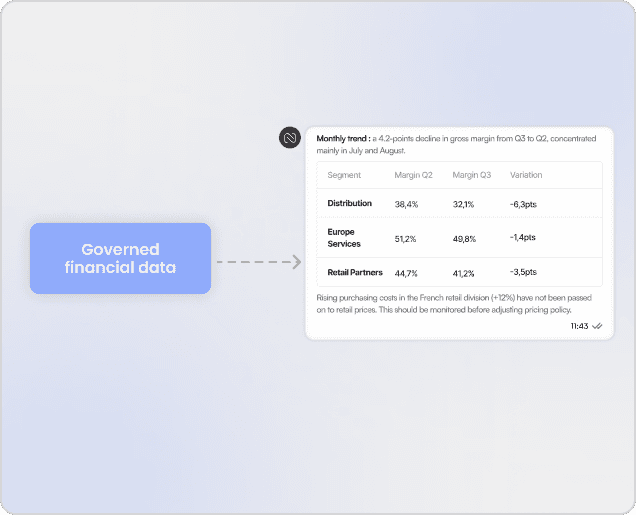
Dana AI becomes more powerful when it works on financial data that has already been structured, mapped, governed, and validated by Finance.
Builder prepares the data layer Dana needs to explain variances, investigate margin movements, identify anomalies, summarize performance, and answer financial questions with context.
Reliable data foundations lead to more reliable AI answers.
With Builder, Dana AI works from financial data that reflects the company's management definitions,
Due diligence-ready financial data
Builder helps Finance produce numbers that can be explained, reviewed, and defended.
Every reported figure can be linked back to its source data, mappings, dimensions, rules, adjustments, treatments, and publication status.
This creates a financial data foundation ready for board discussions, investor reporting, external reviews, and due diligence processes.
Finance teams can show how numbers were built, where they came from, what rules were applied, and how management adjustments were treated.

What Finance teams use Builder for

Built to scale with your company
Builder supports Finance teams as their company becomes more complex.
You can start with a first reporting scope, then expand over time by adding entities, countries, sources, dimensions, budgets, payroll details, cash flow views, and AI-ready analysis layers.
As the business evolves, Builder helps Finance keep its data foundation aligned with the way the company is managed.
Build once. Govern continuously. Analyze everywhere.
Builder gives Finance the trusted data foundation it needs to report faster, analyze deeper, and share numbers with confidence.
It centralizes the rules behind financial reporting, makes data traceable, and prepares the foundation for dashboards, AI analysis, investor reporting, and due diligence.
Ready to govern your financial data?


