

Dana AI
Ask better financial questions. Get trusted answers in seconds.
Dana is the AI Financial Analyst of the Nocloz platform.
She helps Finance teams analyze performance, explain variances, investigate anomalies, answer business questions, and make trusted financial insight available across the company.
Dana works from the financial data your Finance team has already structured, governed, adjusted, validated, and published in Nocloz — on a controlled, flexible AI architecture that uses the most relevant models and specialized financial agents for each question.
Turn trusted financial data into trusted financial answers
The AI Financial Analyst built on trusted financial data
Finance teams spend a large part of their time producing numbers, checking them, preparing reporting packs, answering follow-up questions, explaining variances, and helping the business understand what changed.
Nocloz helps Finance build the foundation first. Dana is the conversational layer that lets users ask questions directly, understand what happened, investigate performance, and move faster from reporting to decision-making.
She helps Finance teams scale their analytical capacity while preserving governance, consistency, confidentiality, and control.

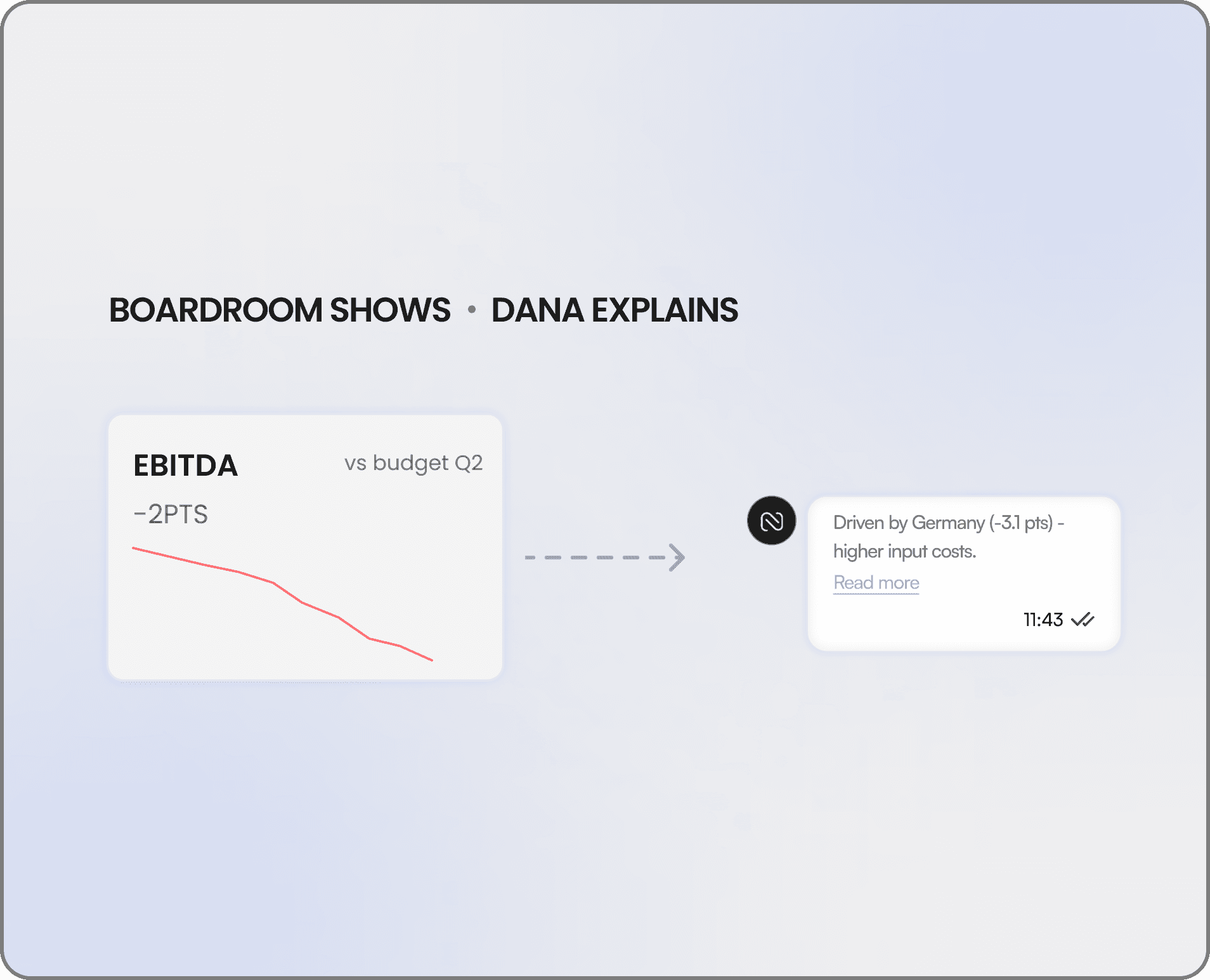
From reporting to financial conversations
Dashboards are essential — they show where performance stands. Dana makes performance conversational.
A dashboard can show that EBITDA decreased; Dana helps explain why. A report can show revenue below budget; Dana identifies which entities, customers, or business units contributed most.
A table can show payroll increased; Dana explores whether the movement comes from new hires, bonuses, commissions, reallocations, or exceptional items. A variance can look unusual; Dana investigates the underlying accounts, partners, transactions, and reporting rules.
How Dana works
Every financial question deserves a clear, trusted, and controlled answer.
Dana gives Finance and business users the ability to ask questions the way they would ask a financial analyst, and get structured answers based on the governed data layer prepared in Nocloz.
What Dana returns is what executives act on, what managers investigate, and what Finance can explain and defend.
1.
Answer financial questions in natural language
Finance teams and business users ask questions the way they would ask a financial analyst, and Dana turns them into analysis based on the trusted data layer prepared in Nocloz.
Why did EBITDA decrease? Which entity explains the revenue variance? What changed in gross margin vs budget? Which costs are drifting? Where should Finance investigate first?
Dana connects to actuals, budgets, payroll, adjustments, dimensions, mappings, and management reporting rules to answer each question with the right financial context.
2.
Explain performance and variances
Dana helps users understand what changed, why it changed, and which drivers explain the movement.
She analyzes revenue, margin, EBITDA, cash, costs, payroll, budget variance, entity and department performance, customer trends, supplier movements, exceptional items, and management adjustments, moving from a high-level movement to a structured explanation that highlights key drivers and points users toward what matters.
3.
Investigate anomalies and unusual movements
Dana helps Finance identify and investigate financial movements that deserve attention.
Which lines moved unexpectedly? Which transactions explain the variance? Which supplier or customer changed the most? Which exceptional item affects EBITDA? Dana focuses investigation on the areas that matter most, analyzing relevant sources, periods, entities, accounts, partners, and employees.
4.
Prepare better business discussions
Dana helps users prepare decisions with better financial context: performance, cost control, margin improvement, hiring plans, budget follow-up, entity reviews, board preparation, and operational arbitration.
It gives users a faster way to understand the financial facts behind a decision, and allows follow-up questions, deeper comparisons across periods, or investigation of a specific movement.
5.
Scale Finance expertise across the company
Finance keeps ownership of financial definitions, reporting structures, access rights, and governance. Dana helps distribute trusted explanations across the organization.
Executives, managers, and operational teams understand performance faster, while Finance remains in control of the data and logic behind each answer.

Ask the questions you’d ask to a financial analyst
Users ask Dana in plain language, and she turns the question into financial analysis grounded in the governed data layer. For example:
Why did EBITDA decrease this month?
Which entity explains the main revenue variance?
What changed in gross margin compared with budget?
Which cost items are drifting?
Which suppliers explain the increase in external costs?
What are the main drivers of payroll growth?
Which movements are recurring and which are exceptional?
Where should Finance investigate first?
What should I understand before my board meeting?
What changed in my perimeter this month?
Built on the Finance-governed data layer
Dana is powerful because she works from financial data Finance has already prepared. She can analyze:
Financial analysis needs the management view of performance — what was adjusted, normalized, reclassified, excluded, grouped, or allocated. Dana works from that Finance-ready dataset: the numbers the company actually uses to manage performance.
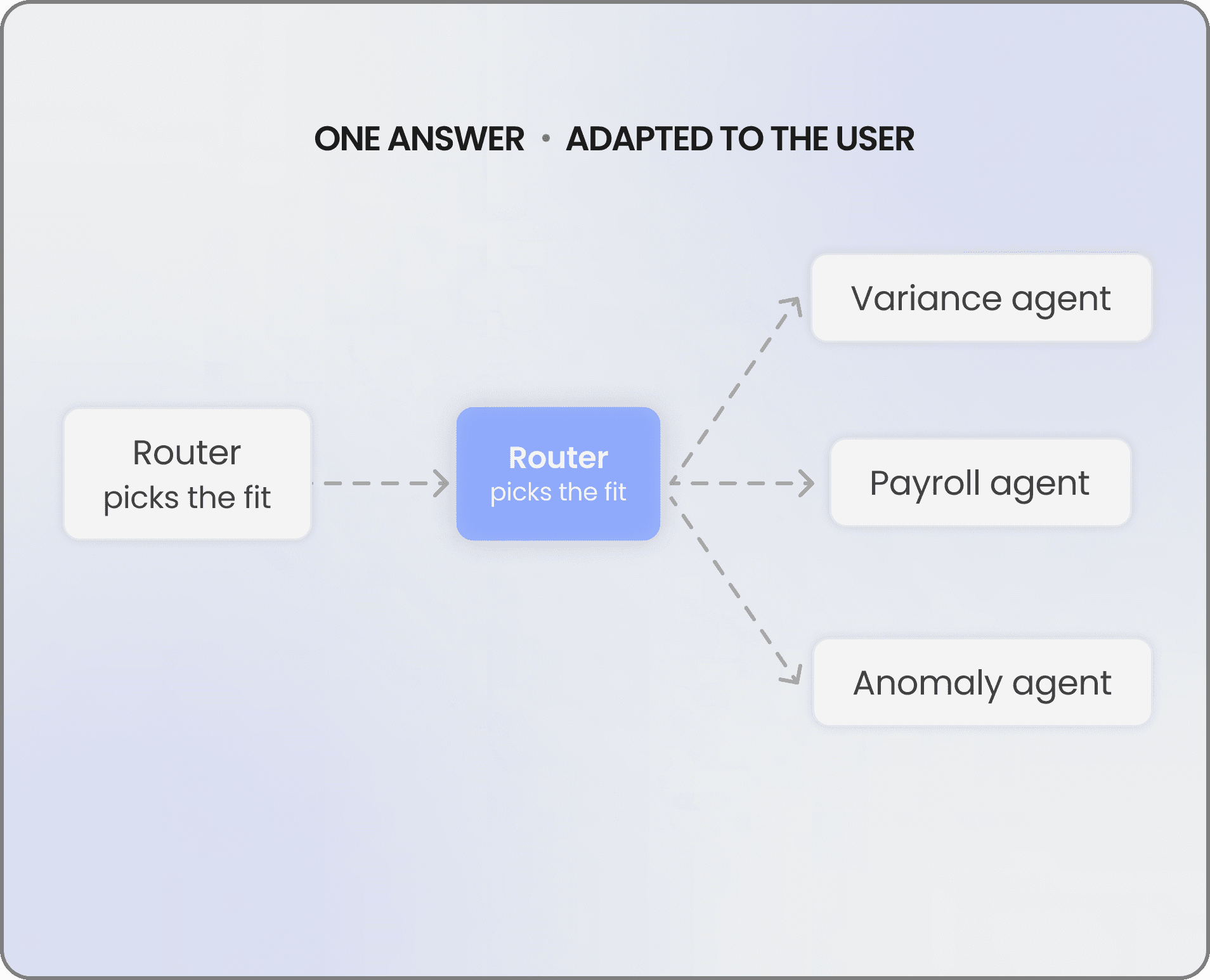
Designed for Finance and business users
Dana adapts the way financial analysis is explained.
A Finance user may want accounting detail, mappings, source data, transaction-level explanations, and variance decomposition. A non-Finance user may need a clearer business explanation: what changed, why it matters, which drivers explain the movement, and what to investigate next.
Both audiences work from the same trusted financial foundation, with explanations adapted to their level of financial expertise.
This helps Finance scale its impact across the company.
What finance gain with Dana

Finance expertise, scaled safely
Dana gives more people access to financial insight while preserving Finance control. Financial data is sensitive, and AI analysis on it requires control over the data layer, access rights, business definitions, and infrastructure.
Dana works within the Nocloz framework:
Nocloz is a member of Hub France IA, the French AI ecosystem. This reflects our commitment to developing trusted and responsible financial AI, designed for enterprise use.
Financial data remains governed inside the platform, user permissions are respected, and answers are produced from the trusted data layer prepared by Finance — AI-powered analysis with the control enterprise Finance teams expect.
Model-flexible by design
Dana is built on a flexible AI architecture. Nocloz can select the most relevant model and analytical capability depending on the financial question — and rely on specialized financial agents for accounting, payroll, performance trends, variance, anomalies, and budget comparisons.
A payroll question, a margin variance, an accounting anomaly, a revenue trend, or a board-level summary may require different reasoning patterns. Dana uses the right capability for the right question.
As models evolve, Dana evolves with them — Finance benefits from progress in AI while keeping its data foundation, business rules, and governance framework stable.
Sovereignty through control: Finance controls the data, the definitions, the access rights, and the AI layer used to analyze sensitive financial information — relevant in Europe, the United States, and beyond.

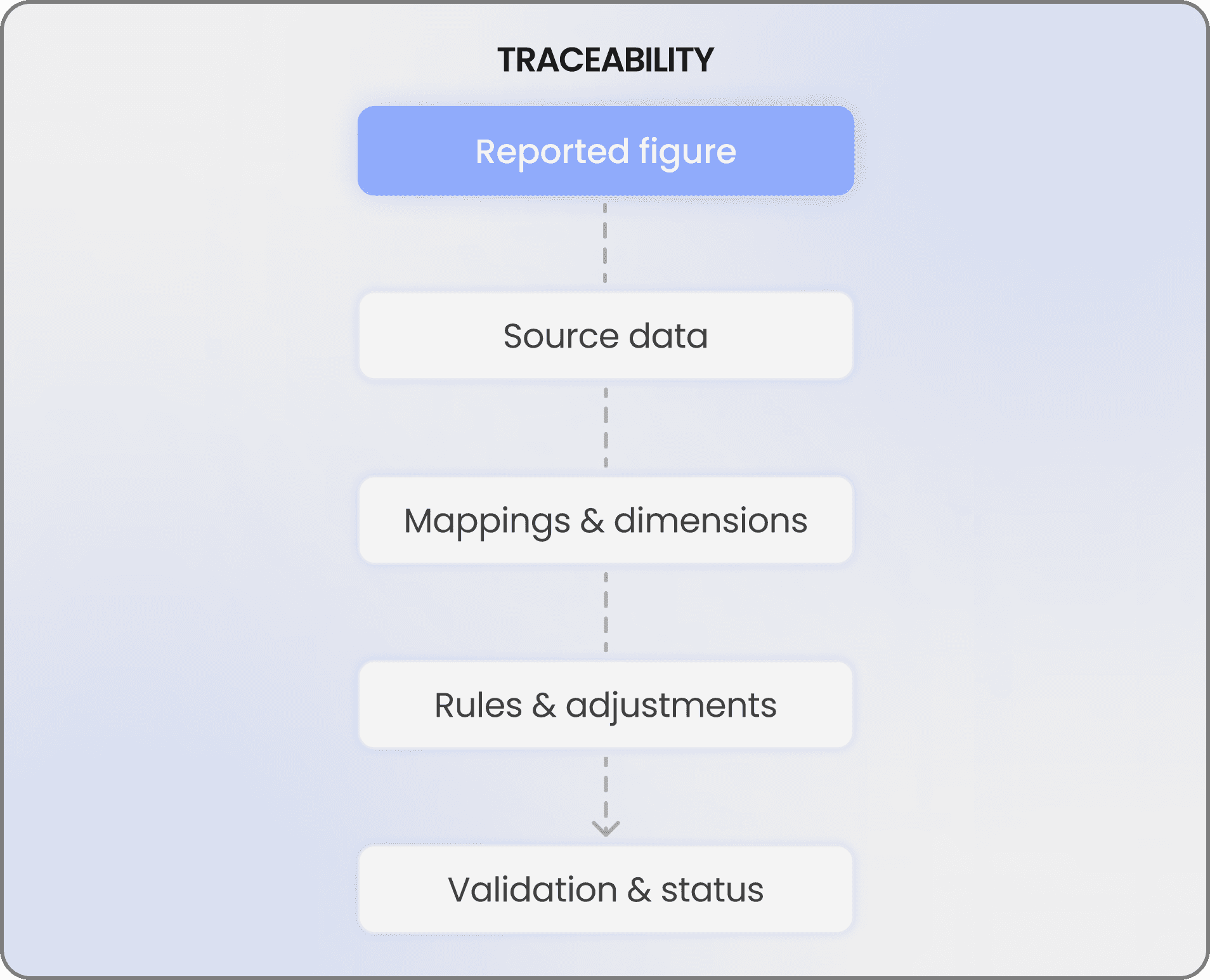
Traceable answers from trusted numbers
Financial AI needs trust. Dana answers from the data foundation governed by Finance, connected to the underlying sources, dimensions, mappings, adjustments, and reporting structures.
Users can understand how an answer was built and what data supports it.
This traceability matters for Finance teams, executives, boards, investors, and due diligence contexts.
Why Dana is different
1.
Built on Finance-ready data
Dana analyzes data already structured, mapped, adjusted, validated, and governed in Nocloz — the numbers Finance trusts.
2.
Designed for financial analysis
Built around the questions Finance and business leaders ask every month: performance, variance, margin, EBITDA, cash, payroll, budget, anomalies, and drivers.
3.
Powered by specialized financial agents
Dana relies on specialized analytical capabilities — accounting, payroll, performance trends, variance, anomalies, budget comparisons — to approach each question with the right context and method.
4.
Built for controlled AI execution
Access rights, reporting structures, data definitions, management adjustments, and traceability remain controlled by Finance.
5.
Connected to the full Nocloz platform
Boardroom sits between Builder and Dana AI. Builder creates the trusted foundation. Boardroom makes it visible. Dana AI makes it actionable.
The same financial data layer supports reporting, exploration, AI analysis, and decision-making.
6.
Adapted to each user, governed by Finance
The same movement is explained differently per user — technical detail for Finance, decision-oriented summaries for executives, business explanations for operations — all within the access rights and definitions Finance sets.
What teams use Dana for
Frequently asked questions
What kind of questions can Dana answer ?
What data does Dana analyze ?
Who can use Dana ?
How does Dana use AI models?
How does Dana handle sensitive financial data?
Can Dana identify anomalies?
Ready to govern your financial data ?
Dana helps Finance move from report production to trusted, scalable financial analysis, turning governed financial data into clear answers, deeper explanations, and better business conversations, with the control, flexibility, and governance sensitive financial data requires.


